Biological Sciences

Biological Sciences students at CMU-Q do more than study science: they learn to follow their curiosity, explore hypotheses, and contribute in a meaningful way as scientists and researchers.

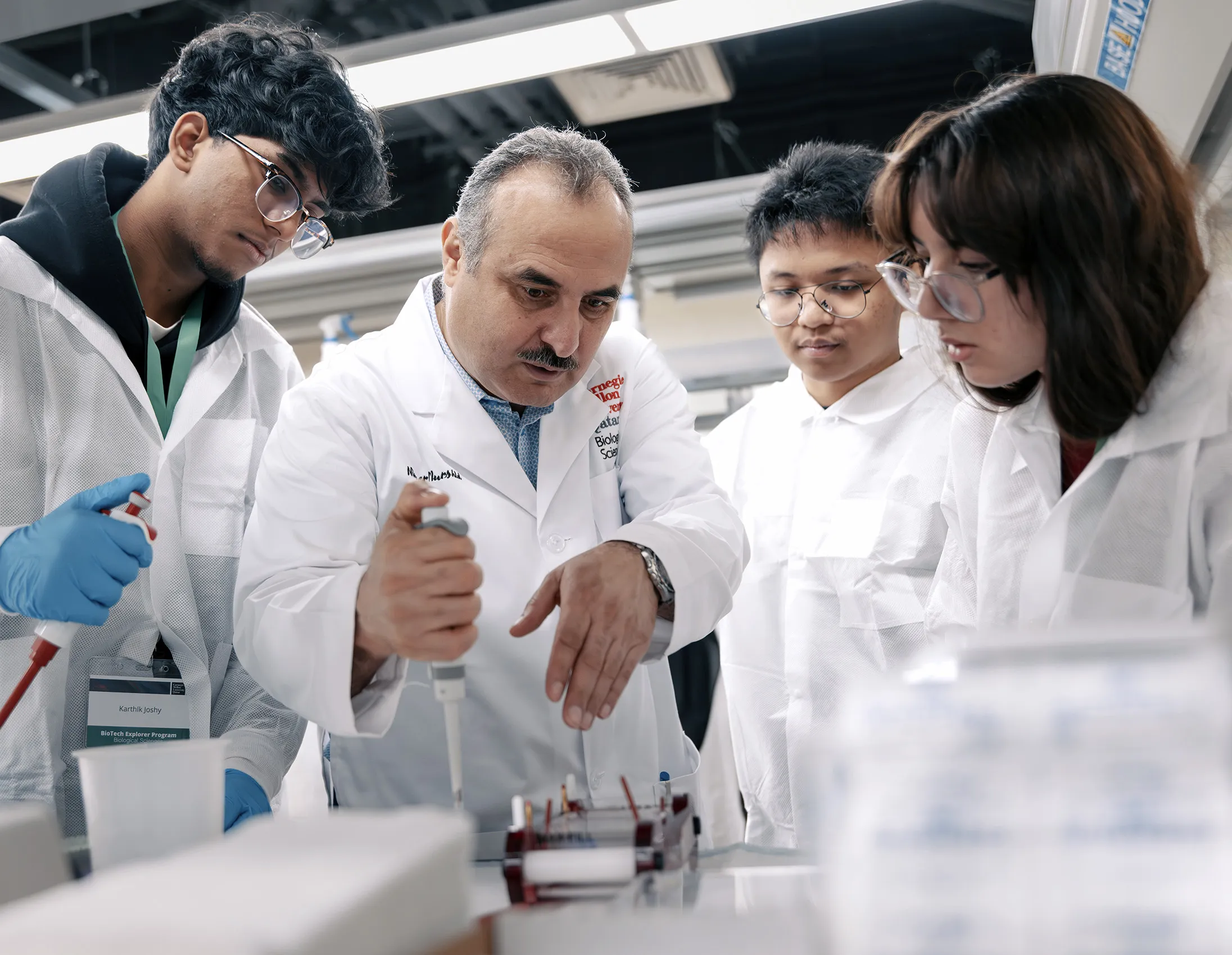
CMUQ Bio Sci faculty with students in the lab, demonstrating experiment

Biological Sciences
at Carnegie Mellon

Carnegie Mellon’s Department of Biological Sciences is a nationally recognized leader in interdisciplinary biological research and education.

The undergraduate degree program is taught at two campuses: the Mellon College of Science in Pittsburgh and Carnegie Mellon University in Qatar.

Together, the Biological Sciences community at CMU includes world-class researchers, dedicated educators and a vibrant community of students driven to explore the fundamental laws of nature and apply them to solve real-world challenges.

Biological Sciences students have identical graduation requirements as students at Carnegie Mellon in Pittsburgh. Graduates have CMU degrees, conferred from the U.S. campus.

Program at a Glance

Students receive rigorous training in biology while building a strong foundation in all of the natural sciences. They study biology at the macro and micro scales, focusing on five core areas:

  • Genetics and molecular biology
  • Biochemistry
  • Cell and developmental biology
  • Neuroscience
  • Computational biology

Students also choose electives in biology, humanities, social science and fine arts, shaping their degree programs according to their unique interests and goals.

Most of our students participate in research during their undergraduate years, often in labs within CMU-Q, in summer research programs or on their own independent projects.

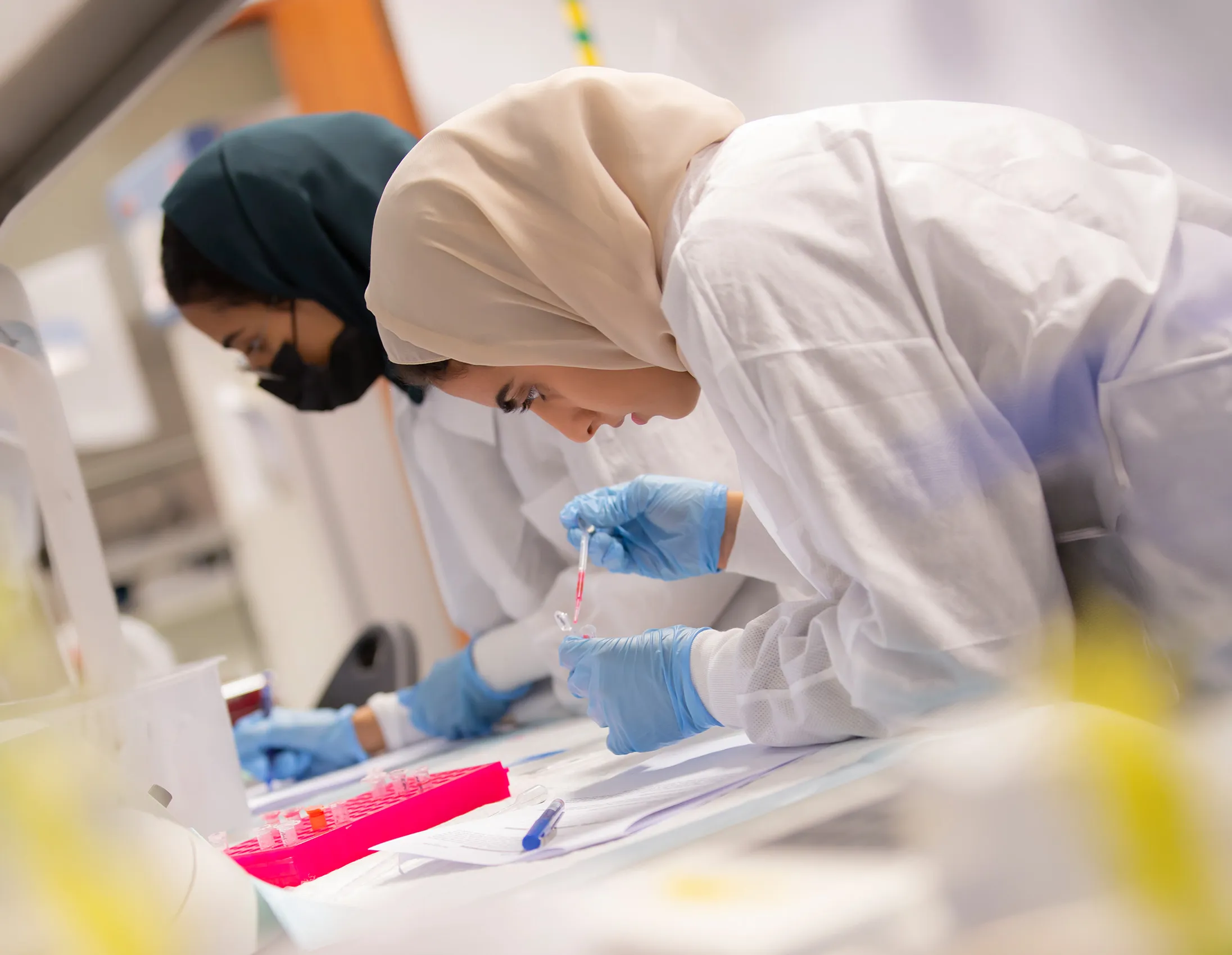
CMUQ students with professor in the Bio lab

Degree Program Details

Curriculum

The Bachelor of Science degree in Biological Sciences has a distinctive core curriculum that provides a foundation in biology, chemistry, computer science, mathematics, and physics. Students also choose electives in biology, humanities, social science and fine arts, shaping their degree programs according to their unique interests and goals.

Biological Sciences students who wish to have a specialized focus can tailor their education to include a minor in disciplines such as computer science or neuroscience. Many students broaden their education by pursuing minors in other disciplines.

Honors Program in Biology Research

The departmental Honors Program offers an opportunity to become extensively involved in research. The program requires students to conduct an independent project and to prepare a formal thesis written and defended in the senior year. The Honors Program is excellent preparation for graduate studies.

Biological Sciences degree breakdown

  • Standard completion time: 4 Years
  • Minimum units required for degree: 360
    • Mathematics, Physics and Computer Science: 54
    • Biology: 131
    • Chemistry: 56
    • Free electives: 48
    • Non Technical breadth requirements: 72

Hands-on experience in the laboratory

One of the most important features of Biological Sciences at CMU is an extensive laboratory component. These inquiry-based, hands-on courses kick-start the transformation of science students to scientists, and often lead to more in-depth projects with faculty members in their research labs.

Frontiers, Analysis, and Discovery in Biological Sciences

In the spring of their first year, students can take an exciting course where they learn to use a cutting-edge genetic modification tool, CRISPR, to edit the genome of a model organism.

Honors Modern Biology

This combination lecture and lab course provides students with a foundation in genetics, biochemistry, cellular and molecular biology, reinforcing experimental concepts and the analysis of experimental data.

Applied Cell Biology

This elective course in the sophomore year allows students to obtain hands-on experience for many of the laboratory techniques that are essential in cell biology research.

Experimental Techniques in Molecular Biology

Students conduct experiments in microbial genetics, molecular biology and eukaryotic genetics, with an emphasis on understanding and applying the biological principles of each experiment.

Experimental Biochemistry

Students learn methods for investigating the structure and function of biological molecules, including enzyme kinetics, spectroscopy, tissue culture and flow cytometry. During several experiments, students design their own projects.

Summer Research Institute in Pittsburgh

Biological Sciences students can apply to the Summer Research Institute, a program for researching molecular biology and biochemistry at the Carnegie Mellon campus in Pittsburgh. Research projects involve recombinant DNA techniques and biochemical methods directed toward the functional analysis of proteins and enzymes.

Learn more about undergraduate research opportunities at CMU-Q

Laboratory facilities

CMU-Q provides specialized laboratory spaces where students can learn, investigate and conduct research.

Biology lab

A state-of-the art lab with equipment for cellular, biochemical, and molecular biology research and teaching. In addition to standard laboratory equipment, the lab has equipment for tissue culture, real-time quantitative PCR, GenomeLab GeXP sequencing system, live cell imaging, and a flow cytometer for cellular analysis. There are two separate labs that are dedicated to faculty and student research, which include several working stations for qPCR, bacterial culture, gel electrophoresis, microscopy, sequencing, and a Biosafety Level 2 tissue culture area.

Chemistry lab

A teaching lab that is equipped with the instrumentation for an upper level quantitative chemistry laboratory (HPLC, ICP-AES, ion chromatography). In addition, there is a separate lab that is dedicated to chemistry faculty and student research, which includes state-of-the art equipment for nanotechnology.

Student projects and research

Research at Carnegie Mellon

At Carnegie Mellon, our mission is to investigate questions that will have a real impact on the world.

As our undergraduates engage in research, we encourage them to think about the question, “why does this research matter?” This is a hallmark of Carnegie Mellon’s approach.

Students in every major can engage in faculty-guided projects in their early years and pursue independent studies and senior thesis projects as they gain knowledge and experience.

What kind of research projects do CMU-Q students do?

  • The development of green solvents as drug delivery vehicles or as part a combinatorial therapy in antimicrobial susceptibility testing
  • Surface plasmon resonance-based biosensor for cancer biomarker detection
  • Nanoparticle-mediated photothermal therapy for cancer using plasmonic nanoparticles
  • Stabilization of silver nanoparticles for safe drug delivery applications
  • Analyzing the molecular pathways involved in senescence and inflammation that lead to metabolic disorders.
  • Investigating metabolic activity and induction of antiviral genes in senescent preadipocytes.
  • Investigating the effect of poly ADP-ribose polymerase (PARP) inhibition on the metabolic plasticity of colorectal cancer cell lines
  • Differential gene expression profile in activated fibroblasts following exposure to factors secreted by tumor cells
  • Evaluating the potential role of miRNAs in fibroblast activation
  • Delineating downstream pathways mediating lycopene and beta-carotene effects in tumor cells and fibroblasts
  • A comparative analysis of the anti-cancer properties of the Mediterranean sage plant (Salvia officinalis) and rosemary plant (Rosmarinus officinalis)
  • The matrix: ECM-specific effects on cancer cell behavior and gene expression
  • Expression and regulation of integrin splice isoforms in breast cancer
  • The role of alternative splicing in pancreatic beta cell differentiation and its impact on diabetes
  • Investigating the functional and mechanistic relevance of a novel intergenic long non-coding RNA in endocrine responsive breast cancer
  • Understanding the nature and mechanism of PTEN intronic non-coding RNA in breast cancer
  • Isoform-specific roles of hnRNPA2B1 in breast cancer: implications for targeted therapeutic strategies
  • Deregulation of minor intron splicing in breast cancer as a novel therapeutic approach
  • Establishing a stable recombinant protein production cell line using CRISPR-Cas9 mediated genome editing
  • Regulation of alternative splicing regulators in cancer

The Educational Experience

Career Pathways

Many Biological Sciences graduates pursue careers in research science in academic, government, biotechnology or pharmaceutical industry laboratories. Others work in the fields of health, forensics, law and education.

Students may choose to pursue graduate studies in a variety of areas such as science, public health, law or business. A degree in biological sciences provides excellent preparation for medical school.

World map showing locations where Carnegie Mellon University in Qatar Biological Sciences alumni live and work, with the largest represented concentration in Qatar.

Qatar

  • Bain & Company Consultant
  • Barzan Holdings Research and Development Analyst
  • Blumen Floral and Design Co-founder
  • Hamad Bin Khalifa University Postdoctoral Researcher
  • Hamad Medical Corporation Resident Physician
  • Ministry of Defense Research Analyst
  • Qatar Biomedical Research Institute Research Assistant
  • Qatar Foundation Manager, Talent Management
  • Qatar Investment Authority Analyst
  • Qatar University Research Assistant, Infectious Diseases
  • Sidra Medicine Physician
  • Weill Cornell Medicine—Qatar Postdoctoral Researcher

International

Abu Dhabi

  • New York University Abu Dhabi Research Associate

Auckland

  • Mott MacDonald AI Adoption Advisor

London

  • Capgemini R&D Transformation Lead, Life Sciences
  • Royal Brompton and Harefield Hospitals Patient Pathway Coordinator

Manchester, NH

  • Catholic Medical Center Physician

New York

  • Ambry Genetics Clinical Genomic Scientist
  • BOLDSCIENCE Lead Medical Writer
  • Lenox Hill Hospital Physician
  • New York—Presbyterian Hospital Resident Physician

San Diego

  • Dexcom Senior Statistical Programmer

Smithfield

  • Chartercare Medical Associates Physician

Vancouver

  • Nucleate Canada British Columbia Partnerships Director

Zurich

  • Cradle Machine Learning Engineer

Further studies

Biological Sciences graduates have furthered their studies at elite institutions, including:

  • Albert Einstein College of Medicine
  • Carnegie Mellon University
  • Cornell University
  • École polytechnique fédérale de Lausanne (EPFL)
  • ETH Zurich
  • Hamad Bin Khalifa University
  • Imperial College London
  • McGill University
  • Monash University
  • Ohio State University
  • Okinawa Institute of Science and Technology
  • Qatar University
  • University of Auckland School of Medicine
  • University of British Columbia
  • University of Cincinnati
  • University of Ottawa
  • University of Pittsburgh
  • Weill Cornell Medicine—Qatar
  • Yale University

Meet the Faculty

Faculty members include experts in biochemistry, cancer biology, chemistry, CRISPR, genomics, next generation sequencing, precision medicine, and tumor immunology.

Nesrine Affara

Associate Teaching Professor, Biological Sciences

[email protected]

Mohamed Bouaouina

Associate Area Head, Biological Sciences / Associate Teaching Professor, Biological Sciences

[email protected]

Simon Faulkner

Associate Teaching Professor, Chemistry

[email protected]

Yasser Majeed

Assistant Teaching Professor, Biological Sciences

[email protected]

Nimer Murshid

Associate Teaching Professor, Chemistry

[email protected]

Adviti Naik

Assistant Teaching Professor, Biological Sciences

[email protected]

Ihab Younis

Area Head, Biological Sciences / Teaching Professor, Biological Sciences

[email protected]